
Team building is not just after-work leisure. For us at WildSteps, it is a strategic tool for rebuilding the deep connection between people, work and nature.
This guide will help you discover what team building really is, what purpose it serves today, and how to choose the right experience to stimulate well-being, collaboration and regeneration within your team.
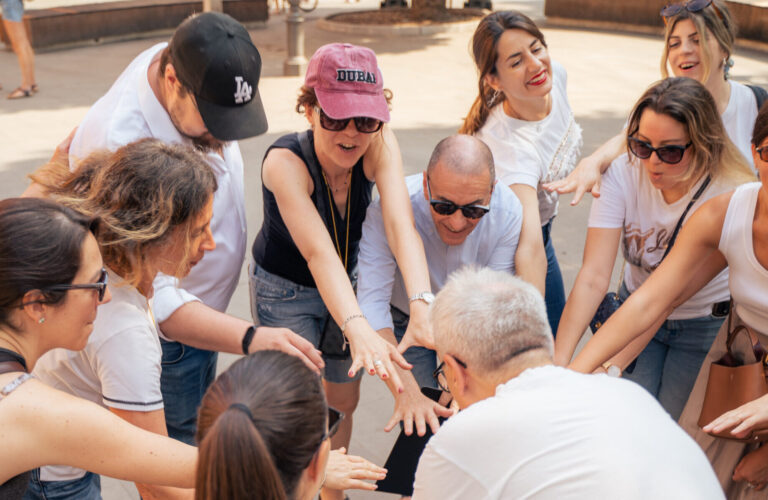
What is team building and what does it mean for WildSteps?
Literally, team building means “building the group.” It refers to activities designed to improve communication and collaboration among the members of a team.
At WildSteps, we take this concept further through the philosophy of regenerative outdoor: people’s well-being is inseparable from that of the environment in which we live and work. It means leaving the office to rediscover ourselves as part of nature and, why not, sometimes getting our hands dirty and having fun just like when we were children.
What is team building for today? Why is it essential today?
The data on engagement in Italy are critical:
Only 5% of workers feel engaged, placing Italy last in Europe, while stress affects 46% of employees. In this context, team building is not an “extra,” but a strategic lever for well-being and business growth:
- Stress reduction: just 10 minutes of exposure to nature are enough to lower cortisol levels, the biomarker of stress.
- Productivity: contact with nature and the effect of biophilia enhance concentration and work performance.
- Creativity: walking outdoors improves creative output by up to 60% compared to sitting.
- Employer branding and attractiveness: for 97% of workers, well-being matters as much as salary; in addition, our impact report shows that for 59% of participants, WildSteps activities improve their perception of the company.
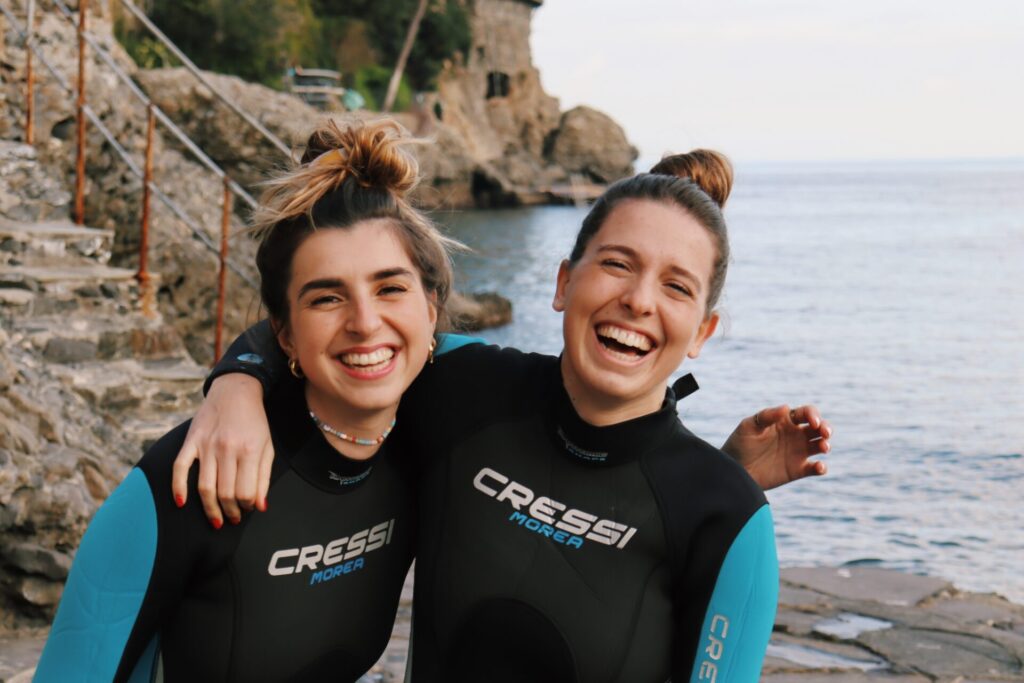
WildSteps guide: how do you choose the right team building activity?
At WildSteps, we design both indoor team building activities and regenerative outdoor experiences.
If you have already decided to fully focus on the power of nature, we invite you to read a previous article to find the outdoor activity best suited to your team.
If, instead, you want to build a 360-degree well-being strategy, keep reading: by matching the soul of your team with our strategic criteria, you will find the perfect “Wild Step” to spark change.
Here is how to find your way through our proposals:
1. Identify the transformation goal
- Creativity and problem solving: if the team feels stuck, choose walking-based activities; outdoor movement is the true engine of new ideas.
- Stress and burnout: if tension levels are high, focus on forest immersion, or forest bathing, for an immediate calming effect on blood pressure and heart rate.
- Engagement and retention: to strengthen the sense of belonging, choose local discovery, for example through the Wine and Ride activity, creating strong identity bonds between people and the surrounding environment.
2. Assess the team “climate”
- Need for energy: choose “energetic” experiences to shake the group out of its sluggishness and stimulate new ways of thinking.
- Need for cohesion: focus on citizen science. Collaborating for the health of the planet significantly increases cooperation among colleagues.
- Need for lightness: choose fun as your guiding criterion. At WildSteps, we believe that if people are not having fun, changing the world is impossible.
3. Values and logistics
- Accessibility: the “wild” is everywhere, even in an urban park. Choose outdoor experiences for the benefits of biophilia, or indoor experiences to keep motivation high even during the colder months.
- Local impact: take your team to discover new local realities. We work only with local partners to ensure a positive social and economic return for the area.
The true value of corporate team building
In conclusion, corporate team building is not just a leisure activity.
It is an intentional space where personal, relational and work dimensions intertwine, allowing people to step outside their usual patterns and reconnect in a different way.
Away from everyday dynamics, the team has the opportunity to work on shared goals in a more connected, more present and slower way.
A slowness that does not slow down results, but makes them deeper and longer-lasting: because when people feel better, they collaborate better.
Team building thus becomes a strategic act of care, capable of generating well-being, alignment and new energy to bring back into the company.