

Biodiversity is the set of all the different forms of life that make up an environment and interact within it.
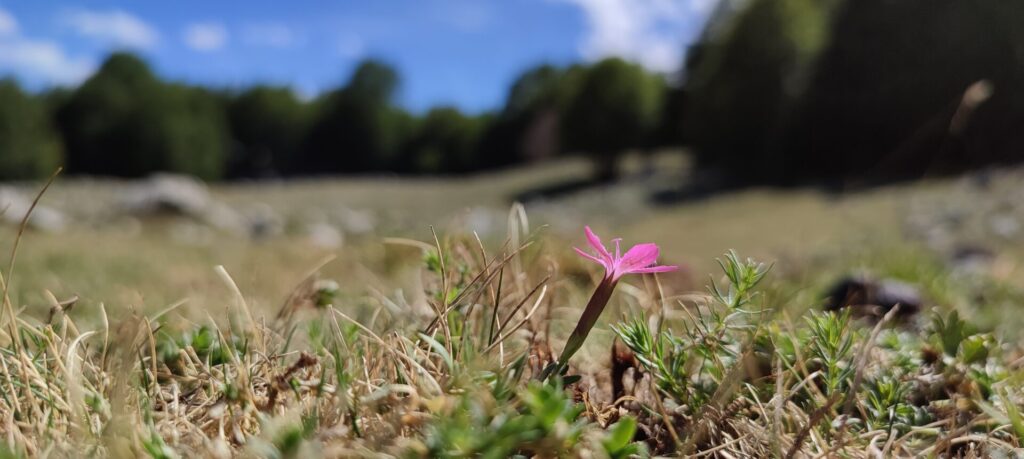
Table of contents
What do we mean by biodiversity?
The word biodiversity refers to the entire variety of the organic world present in a given space. This diversity appears on many levels, both macroscopic and microscopic.
Examples of biodiversity can include landscapes, ecosystems, and habitats, as well as populations, species, and genes.
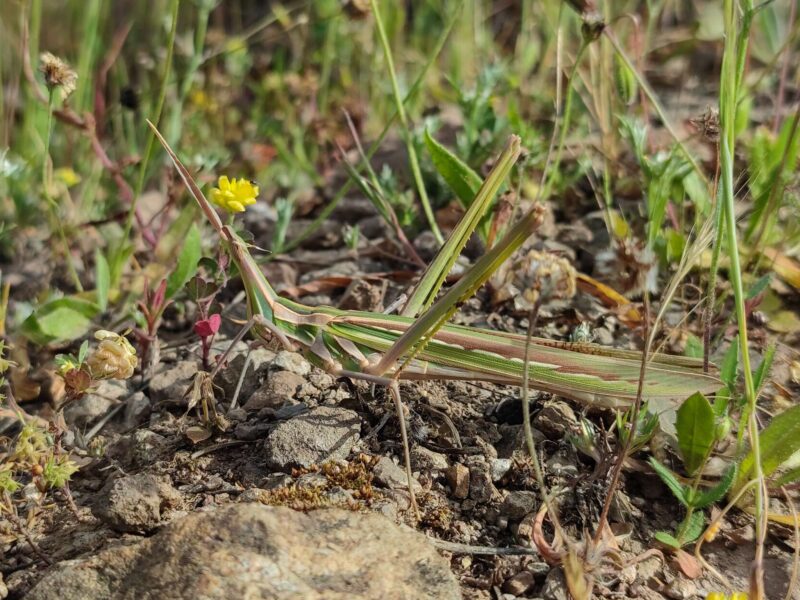
Here is a little game for you: can you spot a grasshopper in this meadow?
It is not an easy task, because one of the greatest wonders of the natural world is at work here: camouflage.
A native animal, meaning one that originates from the place where it lives, that shares the same range of colors as the vegetation hosting it and continues to live within it, is a sign of good health for the entire habitat that supports it.
In fact, it means that its ecological balance is being preserved, along with the delicate relationships between the different species that inhabit it.
Why is biodiversity important?
The priceless importance of biodiversity lies in its uniqueness.
At present, it is the defining feature of Earth. Thanks to this uniqueness, it has played a fundamental role in shaping the world as we know it today. In fact, it is thanks to biodiversity that we have food, oxygen, clean water, and fertile soil — the foundations of Life — in the quantities and quality currently available.
Biodiversity:
- provides nourishment and healthy, balanced diets to billions of people, thanks to its immense variety
- stabilizes atmospheric oxygen levels over time through its life cycles in the oceans and on land
- keeps freshwater clean, thanks to its balancing role within aquatic food chains
- guarantees fertile soil through its invisible but constant underground decomposing action
Biodiversity is also important from another, less material point of view: culture. Throughout history, it has played several roles that have been crucial in shaping the evolving identity of men and women.
The direct and passionate observation of the variety of forms and interactions between the natural and artificial worlds has produced a great deal of science, literature, and philosophy, helping us build, over time, a better way of living on this planet.
Why are we losing so much biodiversity?
The causes of biodiversity loss are many and interconnected, but there are two main causes:
1. Climate change that is too rapid, preventing adequate biological adaptation in the short term.
Climate change that is too rapid means an unnatural acceleration of greenhouse gas levels in the atmosphere, directly caused by the unsustainable model of infinite economic growth implemented by current civilization.
2. Habitat degradation, with habitats destroyed or modified to satisfy lifestyles and economies that are unsustainable in the long term.
Habitat degradation, caused by the excessive expansion of agriculture and industry, means excessive consumption of natural surfaces, resulting not only in biodiversity loss, but also in the loss of fertile soil, clean groundwater, and so on.
How can we protect biodiversity?
Fortunately, today we have new scientific knowledge and practical tools that allow us to implement more effective measures to address biodiversity loss.
In our own homes, in addition to adopting lower-impact lifestyles, we can create ecological gardens or balconies that act as refuges for native fauna and flora, for example by planting local trees, shrubs, and herbs, mowing the lawn less frequently, or building insect hotels and bat boxes, and so on.
Another path is to actively collaborate with scientific projects that monitor and protect nature, such as those connected to the world of citizen science.
Citizen science is science carried out by ordinary people who do not have specific training in the field, but who still have the willingness and determination needed to help improve the overall picture.
With citizen science, for example, we can use our phones to record biodiversity over time and understand the health status of its populations. Apps such as iNaturalist, Merlin, or PlantNet, when used well, make it possible to monitor different species and obtain quality scientific data easily and practically through a smartphone.
Biodiversity and WildSteps
WildSteps is closely connected to the topic of biodiversity, as safeguarding it and educating people about it are founding pillars of its history.
Through the practical tool of citizen science, we support companies and motivated people in getting involved and understanding how they can be useful, make their contribution, and take action.
Whether at sea or on land, we have a wide network of scientific, practical, and theoretical tools that allow us, for example, to:
- directly monitor nature, helping create a broader and more aware network of proactive guardians;
- restore or create semi-natural environments, such as ponds, hedges, or ecological meadows, whose spontaneous naturalization by pollinators, birds, reptiles, amphibians, herbs, shrubs, and more we then facilitate;
- collect and catalogue waste in natural areas, accompanied by environmental interpretation of those polluted places, with the aim of carrying out an even more complete, useful, and holistic action in its final goals;
- provide theoretical and practical training on the world of citizen science and its applied tools, with the aim of producing a change in everyday approaches and behaviors toward biodiversity and its conservation and enhancement.