
Emails, notifications, meetings piling up. By the end of the day, you have had enough: you feel tired, drained. Your body is not made to stay under constant pressure for hours and hours. Ongoing work-related stress has direct effects on body and mind, putting the body in a state of constant alert. Too many demands and no real breaks.
The solution? Change environment. One step into green spaces and the noise fades, your body resets.
The rustling of leaves, birdsong, natural sounds that slow the heartbeat, calm the breath and instantly improve mood, bringing mind and body back together.
What you feel is not just a sensation. It is a biological response.
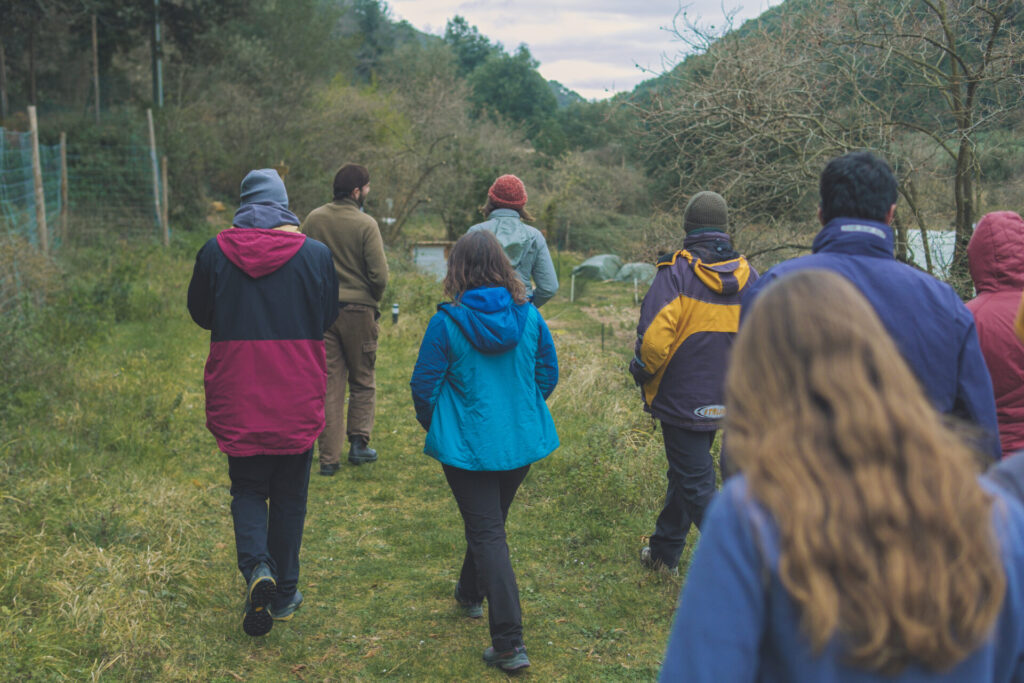
Table of contents
What are the effects of work-related stress on body and mind?
Work has a deep impact on physical and mental health: a healthy environment supports psychophysical well-being, while an oppressive context causes stress, anxiety and burnout, and also affects the body through poor posture and overly demanding rhythms.
According to Mind Share Partners (2021), in the United States 76% of workers report at least one work-related mental health symptom, and 84% say that their workplace conditions contributed to it.
The most common symptoms of work-related stress are:
- muscle tension
- constant fatigue
- difficulty sleeping
- irritability
- reduced concentration
In addition, a negative work environment does not only affect working life, but continues to be felt in private life as well. In other words, we remain in alert mode even when we do not need to.
But the body is not stuck in this state: it simply needs the right conditions to get out of it.
Contact with nature has a real impact on the health of both body and mind. This is where we begin to slow down and recover.
More and more research highlights a direct link between time spent in green spaces and psychophysical well-being. A balance we often lose in our work routine.
Why does nature reduce work-related stress? (what science says)
More and more studies show a direct link between time spent in nature and reduced work-related stress.
Effects on the mind
Anxiety is reduced by up to 40%, depression levels decrease by 15–25%, and greater mental clarity is generally observed. Creativity, problem solving and attention levels increase, improving office performance and productivity.
(The Lancet Planetary Health (Nguyen et al., 2023))
Effects on the body
Blood pressure decreases by up to 4.8 mmHg and physiological stress drops significantly. Spending time in nature helps strengthen the immune system and reduce metabolic disorders. In particular, increased physical activity reduces obesity rates.
(The Lancet Planetary Health (Nguyen et al., 2023))
Effects on movement
In nature, people generally take at least 900 steps, with a significant increase in physical activity without perceiving fatigue. It has also been widely shown that exercising outdoors, especially in nature, increases motivation and the willingness to maintain consistency in training.
(The Lancet Planetary Health (Nguyen et al., 2023))
These changes are closely linked to natural stimuli and are necessary in order to reduce work-related stress. In the city, our body is bombarded by artificial inputs, always ready to enter fight-or-flight mode at any moment. When we are in nature, on the other hand, the alert system calms down, the mind clears, concentration increases and the body activates spontaneously.
In nature, the brain focuses on three simple activities: breathing, walking and observing.
How to reduce work-related stress in practice: the 20-5-3 rule
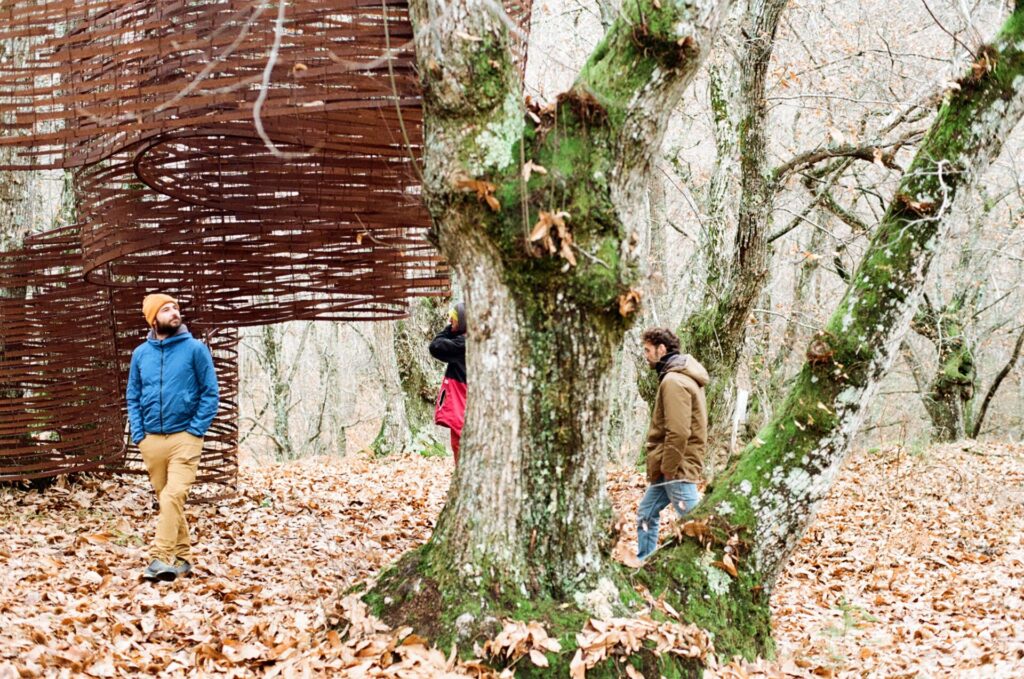
When walking in nature, the body relaxes automatically. It leaves the constant stress mode it is exposed to every day at work and enters a state of recovery and regeneration. The muscles release, the breath slows down, and the nervous system rebalances.
Nature removes the noise of daily life and brings the mind back to the here and now.
In some contexts, even medicine has begun to “prescribe” nature as a concrete tool for physical health and mental well-being.
One example is the 20-5-3 rule:
- 20 minutes outdoors for 3 days every week
- 5 hours in nature every month
- 3 completely offline days every year
You do not need intense activities or special performances. All you need to do is stop, breathe and let the environment do its work.
For example, through small daily breaks — you can find a few ideas here.
Nature and work: why it also improves team well-being
The benefit of nature is not limited to the individual: it also extends to the way people work together.
When stress levels decrease, communication, listening and collaboration automatically improve.
A team that steps out of the digital routine and immerses itself in a natural setting develops greater mutual trust, more creativity and better problem solving.
It is not just about “switching off”, but about creating the conditions for people to start functioning better together again.
That is why team building in nature is not a recreational activity for its own sake, but a tool that affects well-being and company performance.
We explore this in more detail in the article dedicated to spring as an opportunity for team growth: “Spring in the workplace: it’s time to help your team bloom with WildSteps”.
You can keep working on performance. Or you can work on the conditions that make it possible.
And often, those conditions begin outside the office.