

Organizing a company retreat does not mean taking your team on holiday.
It means creating a strategic space where people can pause, realign, and start again with renewed energy.
In an increasingly fluid and digital world of work, a retreat makes it possible to work on aspects that video calls simply cannot reach. It is an opportunity to turn a group of colleagues into a close-knit team, helping people regenerate and reconnect on a deeper level.
More and more companies are choosing to organize a 2- or 3-day company retreat to work on vision, cohesion, and well-being.
But how do you actually design an effective retreat?
In this guide, you will find:
- what distinguishes a company retreat from a classic team-building activity
- how to define clear goals
- which activities to choose
- mistakes to avoid
- how to structure a 2-day retreat
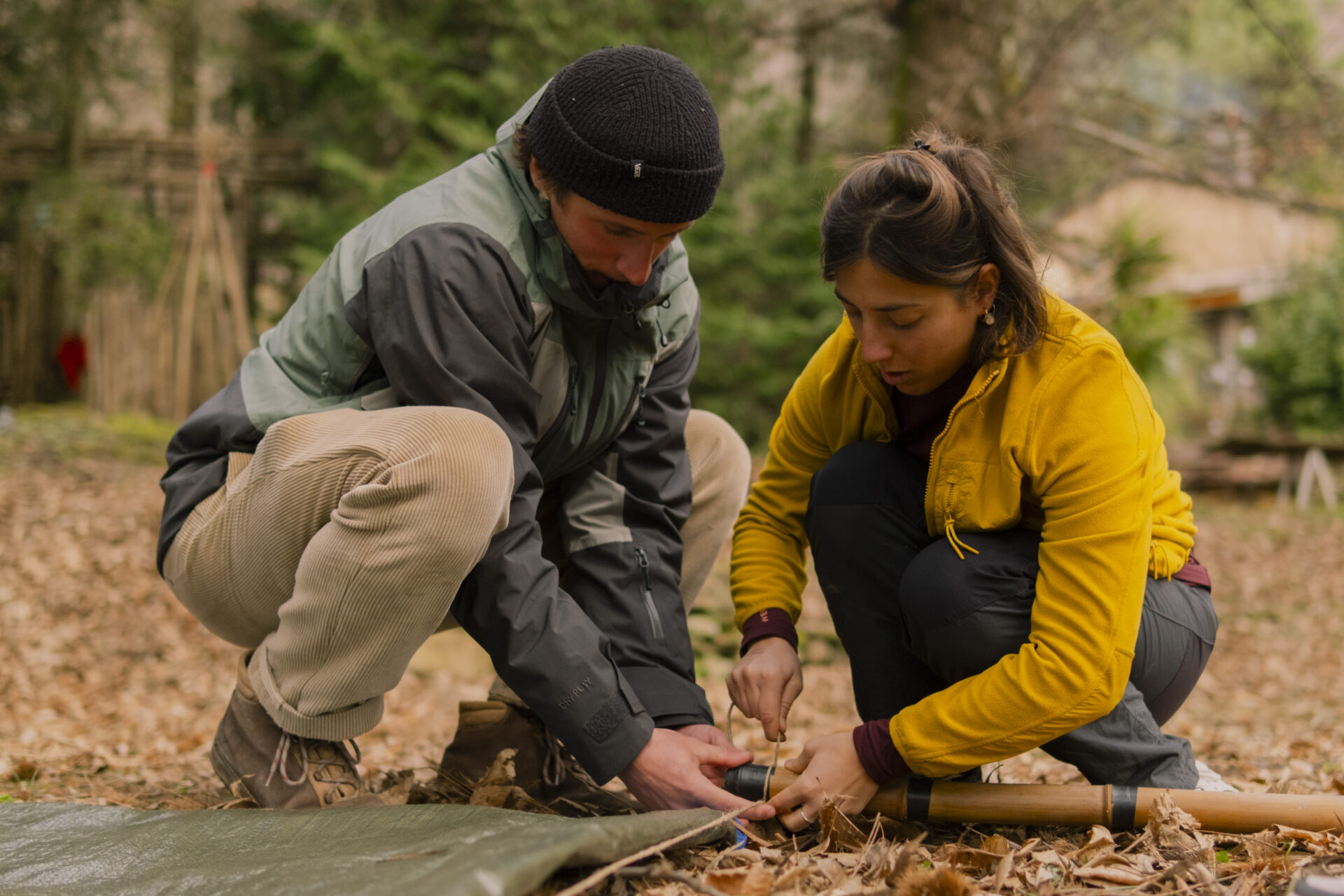
What a company retreat is (and what it is not)
A company retreat is an immersive experience that takes the team outside its usual environment to work on deeper dimensions: vision, strategy, relationships, and collective energy.
The difference compared with a classic team-building activity is not only about duration, but about intention.
Team building often works on specific dynamics — communication, collaboration, problem solving — through activities limited in time.
A retreat, on the other hand, creates a broader container: it allows the team to address strategic questions, ease latent tensions, and redefine priorities.
It is a space where people are not just professional roles. They become individuals again, contributing to a shared project.
Some goals of company retreats are:
- Slowing down: creating the mental space to reflect on long-term vision and strategy, away from daily urgencies.
- Reconnecting: strengthening human bonds by getting to know one another better as people, not just as professional roles.
- Recharging: using the power of nature to fight stress and rediscover the creativity needed to innovate.
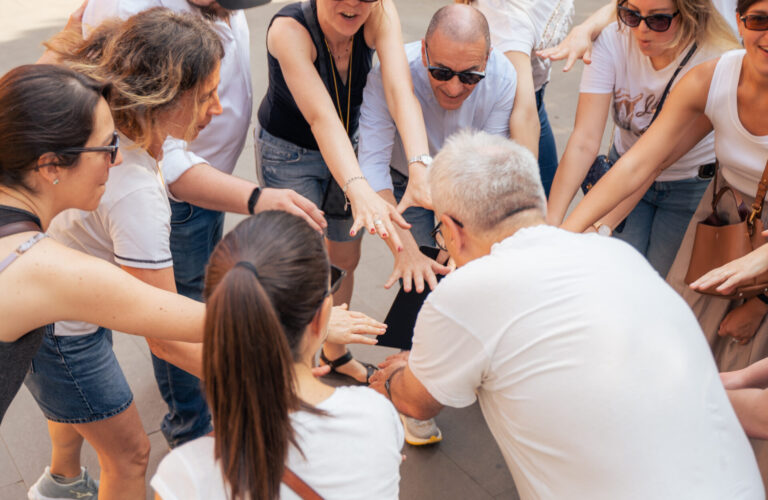
Why a company retreat is a strategic choice today
Many companies choose to organize a retreat when they are going through a critical transition: rapid growth, a leadership change, or a transformation phase.
At other times, the signal is more subtle: the team works, but lacks energy; meetings multiply, but decisions do not move forward; people collaborate, but do not feel truly connected.
This is exactly where a company retreat comes in.
By creating distance from day-to-day operations, it generates perspective. And perspective makes it possible to make better choices.
It is not a luxury. It is evolutionary maintenance.
How long should an effective company retreat last?
An effective company retreat rarely fits into a single day.
The first day is needed to slow down and truly “switch off.” The team arrives still carrying the pace of work. Only after a few hours — often on the second day — do deeper and more authentic conversations begin to emerge.
This is why the ideal duration is at least two days and one night.
Even better if it unfolds over two or three full days: time becomes an ally of change.
Time, in a retreat, is not a cost. It is the raw material.
How to organize the retreat: step by step
1. Define the goal: what are you looking for your team?
Many people start from the destination. That is a mistake.
An effective company retreat starts from one clear question:
what should change after this experience?
Do you need to realign the vision?
Integrate new members?
Ease tensions?
Celebrate an important milestone?
The goal guides every subsequent choice: activities, rhythm, facilitation, and duration. Without this clarity, even the most beautiful location risks becoming nothing more than a nice backdrop.
2. Choose a setting that supports change
The location is not a logistical detail. It is a tool.
A company retreat in nature, away from urban environments and standardized conference rooms, automatically changes the rhythm of interactions. People move more, breathe differently, and listen more attentively.
Nature is not a decorative background. It is a catalyst.
It lowers hierarchical barriers, encourages informal conversations, and facilitates introspection.
A good setting prepares the ground even before the program begins.
3. Experience and reflection
A retreat cannot be only dynamic activity, nor only a theoretical workshop.
Effectiveness comes from the balance between action and reflection.
Outdoor experiences — such as walks, explorations, and group activities — create real situations in which leadership, communication, tensions, and spontaneous collaboration emerge.
The following moments of discussion make it possible to give meaning to what happened. That is where experience becomes learning.
Without reflection, it remains a nice memory.
With reflection, it becomes change.
4. Take care of facilitation and rhythm
One of the most common mistakes is thinking that it is enough to “take the team outside.”
A company retreat requires facilitators who can read group dynamics, modulate energy, and intervene when needed. It is not about controlling the process, but about accompanying it.
Rhythm is also fundamental.
An agenda that is too packed prevents people from breathing. One that is too light weakens the intention.
A retreat is a delicate balance between intensity and space.
Between deep work and free time.
Between sharing and silence.
Mistakes to avoid when organizing a company retreat
Many company retreats fail not because of a lack of enthusiasm, but because of a lack of design.
A frequent mistake is overloading the program in an attempt to “make the most of every minute.” In reality, informal moments — a walk without an agenda, a conversation by the fire — often generate the most important insights.
Another mistake is failing to plan a follow-up.
A retreat should not be an isolated event, but the beginning of a journey. Without continuity, the energy built up tends to fade away.
Finally, underestimating relational dynamics can make the experience superficial. A good retreat creates a safe space where vulnerabilities can emerge too, not only performance.
The WildSteps approach: nature as a working tool
At WildSteps, we believe that:
“to build great things, we must first have the courage to stop, breathe together, and rediscover that we are, first and foremost, a team of extraordinary human beings.”
For us, nature is not just the backdrop of the experience, but the real working tool: it is in the woods, along trails, or in front of a fire that the team slows down, changes perspective, and experiences new relational dynamics.
Our pillars are concrete and result-oriented:
- Immersive experience: retreats last a minimum of two days and alternate, in a balanced way, deep outdoor activities with indoor moments of discussion and reflection.
- Living method: team building is not explained, it is lived. We work on the most relevant topics for the team in a concrete, lived way, never only in theory.
- Real sustainability: every event is designed with respect for the local area, enhancing local realities and reducing environmental impact.
Nature becomes the space where people can slow down, change perspective, and experiment with new ways of relating.
It is not escapism: it is a working tool.
Every retreat is built around the team’s real goals, with expert facilitators and particular care for rhythm and local impact.
Investing in a company retreat means investing in people
A company retreat is not a break from productivity.
It is a responsible choice for the future of the team.
Stopping, breathing together, and redefining priorities takes courage. But it is often precisely that pause that generates the clarity needed to make a real leap forward.
If you are thinking of organizing a retreat for your team and want to design an experience that brings together strategy, nature, and professional facilitation, we can help you shape the path best suited to your goals.