
Sustainable team building is a group activity designed to engage company employees in experiences that raise awareness of environmental and social sustainability topics.
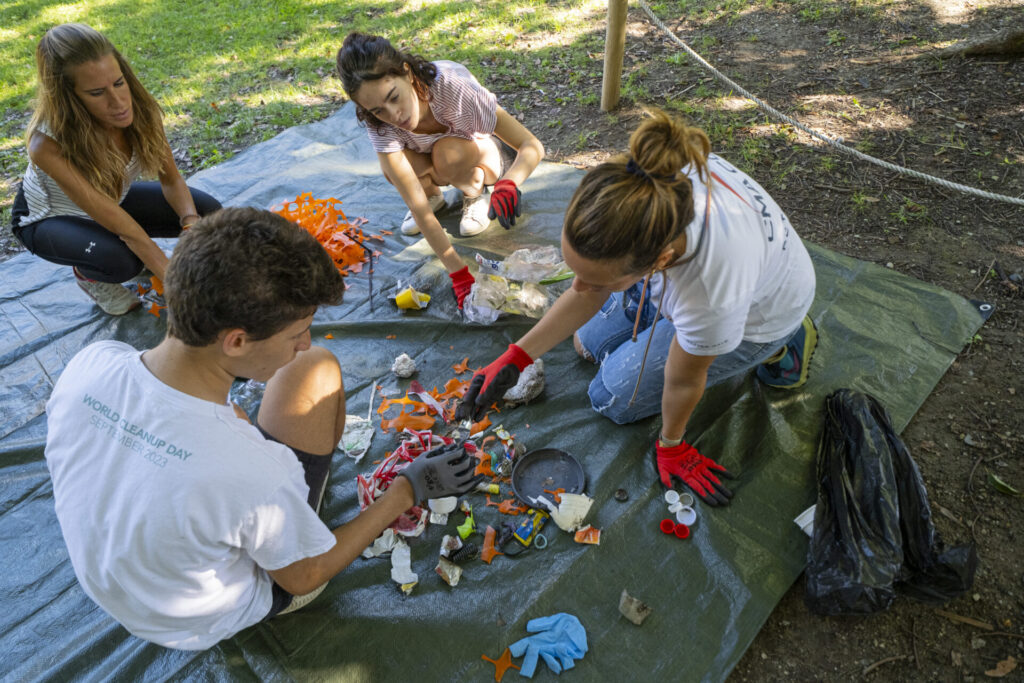
Table of contents
What does sustainable team building involve?
A team-building experience can become a catalyst for directly engaging employees and raising their awareness of the company’s sustainability strategy and sustainable development topics, both environmental and social.
For example, the team-building activities organized by WildSteps have 4 key ingredients:
- Nature: the activities we offer take place outdoors, in areas of high natural interest, both at sea and on land.
- Outdoor activities: a mindful way to actively spend time in nature, offering the chance to discover what surrounds us with curious eyes.
- Positive environmental impact: through citizen science activities such as biodiversity monitoring, waste collection and cataloguing, and monitoring watercourses to assess their quality.
- Participants’ well-being: because spending time in nature improves mental and physical health and helps us relate better to others.
Why organize sustainable team building?
We believe there is no reason not to do it, but here are some of the reasons why you should start organizing your next corporate team-building experience on sustainability topics right away.
- Employee engagement on sustainability topics, which are especially important to younger generations.
- Employee retention: because team-building activities increase motivation and a sense of belonging.
- Sustainability strategy: through sustainable team building, you can communicate your ESG and sustainability strategy in a concrete and tangible way, making all employees feel involved.
- Corporate reputation: you can share the positive impact in your sustainability report or on social media channels to inspire others to take action.
Listen to the opinion of someone who has already taken part in sustainable team building in nature.
Examples of sustainable team-building activities
Our motto is “Impact comes from action” which is why we want to share sustainable team-building experiences we have already organized in collaboration with proactive companies that got involved and engaged their teams to create a positive impact on people and the planet.
Be inspired by their actions for your next sustainable team-building experience.
Beach Clean-up with Too Good To Go in Sestri Levante
Too Good To Go Italia decided to include, during its team-building days in Sestri Levante, a beach clean-up activity based on a scientific protocol and supported by WildSteps, first and foremost to preserve the natural beauty of this place, while also learning to recognize and catalogue different types of waste and gaining greater awareness of the current situation in coastal areas.
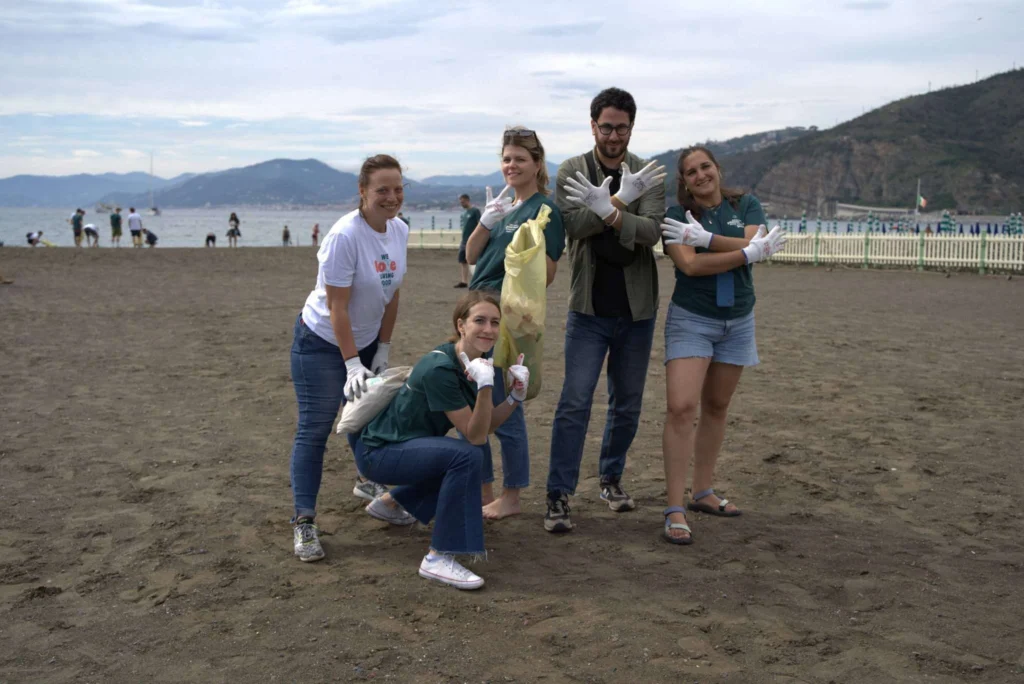
At the end of the activity, 5,052 items of waste were collected, for a total of 18 kg of plastic. The most common items were 2,830 plastic pellets, followed by 1,949 cigarette butts and 74 pieces of glass.
A clean-up activity as team building in nature is useful for:
- Engaging large numbers of people
- Actively contributing to environmental issues and SDGs such as 13, 14, and 15
- Providing sustainability training in a proactive and participatory way
Nature Game with Verallia in Finale Ligure
Verallia Italia decided to directly involve its people to talk about biodiversity and create a positive impact on the environment. It therefore took part in the Forest Pirates activity, a “biodiversity hunt” created by WildSteps in partnership with zeroCO2.
The main goal was to raise awareness of the species encountered and their importance for local biodiversity.
The activity took place in Pian delle Pietre, in the karst area of Capo Noli-Manie-Val Ponci, an area rich in biodiversity and therefore included in the Province of Savona’s system of areas of environmental and natural interest.
The Forest Pirates activity as team building in nature is useful for:
- Addressing biodiversity in a fun way through gamification
- Actively contributing to environmental issues and SDGs such as 13, 14, and 15
- Organizing an innovative corporate event, different from the usual team-building activities
Sorgenia Outdoor Challenge: Greeners monitoring biodiversity
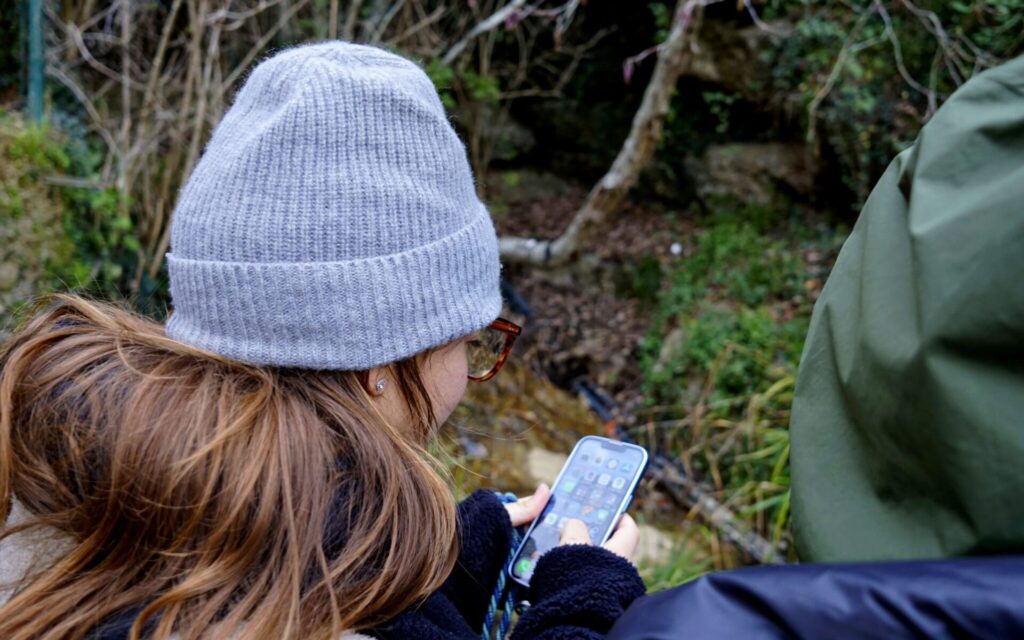
Sorgenia decided to involve both its employees and its community of customers interested in sustainability topics in a challenge to monitor biodiversity, wherever they were. Participants learned how to report species of flora and fauna using their smartphone camera, thanks to our dashboard with educational and interactive content.
From theory, participants immediately moved into practice: thanks to the iNaturalist app, they took part in the challenge by monitoring more than 1,200 observations of over 700 different species. Since this is a real challenge, the 15 participants who photographed the most species are rewarded with an experience in nature.
The Outdoor Challenge activity is a perfect sustainable team-building experience for:
- Large companies with several locations that find it difficult to organize corporate events because of complex logistics
-
- Engaging employees in everyday life, as well as corporate stakeholders such as customers and suppliers, making them feel like an integral part of the company and its sustainability strategy
-
- Companies that mainly work remotely and want to give their people flexible and practical sustainability tools
-
- Introducing gamification elements and making training fun and dynamic
Sustainable team building with WildSteps
As you have seen, with WildSteps we have already helped many companies organize corporate team building.
Do you want to discover how WildSteps can help your company organize team-building activities in nature that promote sustainability and collaboration?